In today’s digital world, speed is everything. Whether it’s live sports, breaking news, esports tournaments, or financial market updates,Low Latency IPTV Streaming viewers expect content to reach their screens instantly. The experience can be ruined by even a few seconds of delay. This is where Low Latency IPTV becomes the true game changer.
Low latency IPTV is transforming how live television is delivered over the internet. It minimizes delay, reduces buffering, and ensures near real-time streaming performance. In 2026, low latency has become one of the most important features separating premium IPTV services from average providers.
In this complete guide, we’ll explore what low latency IPTV is, how it works, why it matters, the technology behind it, its benefits, challenges, and why it is the future of real-time streaming.
What Is Low Latency IPTV?
IPTV (Internet Protocol Television) delivers TV content through internet protocols instead of traditional satellite or cable systems.
Low latency IPTV refers to IPTV systems designed to minimize delay between a live event and what appears on your screen.
Latency in streaming typically occurs due to:
- Video encoding and compression
- Data transmission
- Buffering
- CDN routing
- Device decoding
Traditional streaming delays can range from 20 to 60 seconds. Low latency IPTV reduces this delay to just a few seconds—sometimes under 5 seconds.
Why Latency Matters in Live Streaming
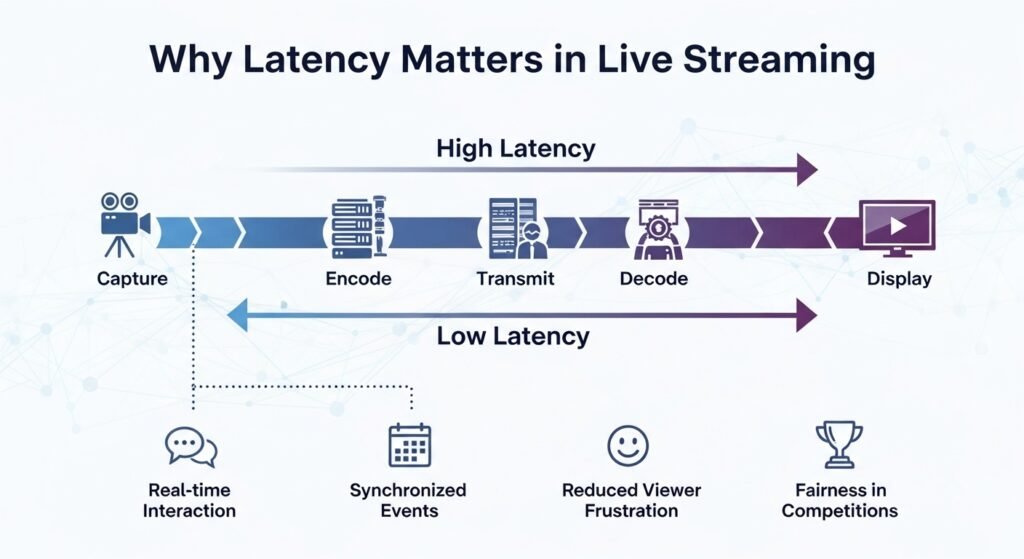
Latency may not seem important when watching a movie on demand. But for live content, it’s critical.
1. Live Sports
Imagine watching a football match and receiving a goal notification on your phone before it happens on your TV. That delay ruins excitement.
Low latency IPTV USA ensures:
- Real-time reactions
- No spoilers
- Synchronized viewing
2. Breaking News
In news broadcasting, timing is essential. Delayed information can reduce relevance.
3. Financial Markets
Traders rely on live financial news. Even a small delay can impact decisions.
4. Online Gaming and Esports
Esports fans expect minimal delay to feel connected to the event.
How Low Latency IPTV Works
Several technologies work together to reduce delay.
1. Advanced Video Codecs
Modern codecs like H.265 (HEVC) and AV1 compress video efficiently without increasing delay.
Better compression = faster transmission.
2. Adaptive Bitrate Streaming (ABR)
ABR automatically adjusts video quality based on internet speed.
Instead of stopping to buffer, the stream shifts quality smoothly.
3. Content Delivery Networks (CDNs)
CDNs distribute content through multiple servers worldwide.
The closer the server is to the user, the lower the delay.
4. Chunked Transfer Encoding
Instead of waiting for full segments to download, low latency streaming sends smaller chunks immediately.
This significantly reduces delay.
5. Edge Computing
Edge servers process data closer to the user, minimizing travel distance and latency.
Traditional IPTV vs Low Latency IPTV
| Feature | Traditional IPTV | Low Latency IPTV |
|---|---|---|
| Delay | 20–60 seconds | 2–5 seconds |
| Sports Experience | Delayed | Near real-time |
| Channel Switching | Slower | Faster |
| Buffering | Moderate | Minimal |
| Live Interaction | Limited | Improved |
Low latency IPTV clearly provides a superior live experience.
Benefits of Low Latency IPTV
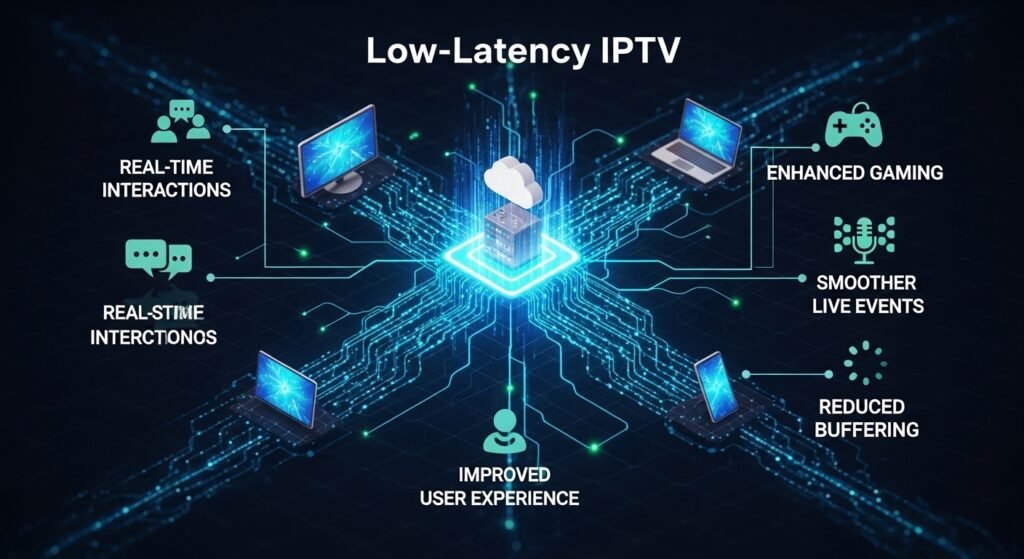
1. Real-Time Viewing
Viewers experience events almost simultaneously with the actual broadcast.
2. Better Sports Experience
Fans can celebrate goals without social media spoilers.
3. Improved User Satisfaction
Reduced delay increases trust in the service.
4. Competitive Advantage for Providers
IPTV services offering low latency stand out in 2026’s competitive market.
5. Enhanced Interactive Features
Low latency allows:
- Live voting
- Real-time chats
- Interactive sports statistics
- Multi-angle camera switching
Internet Speed and Low Latency
Your internet connection plays a vital role.
Recommended speeds:
- 10 Mbps for HD
- 25 Mbps for 4K
- 50+ Mbps for multi-device households
Using Ethernet instead of Wi-Fi improves stability and reduces delay.
Role of 5G in Low Latency IPTV
5G networks offer:
- Ultra-fast speeds
- Lower ping rates
- Better mobile streaming performance
This makes low latency IPTV possible even on smartphones.
Fast Channel Switching and Latency
Low latency IPTV also improves channel switching speed.
Traditional IPTV might take several seconds to load a new channel.
Modern systems use:
- Preloading techniques
- Predictive buffering
- Smart caching
This results in near-instant switching.
Challenges in Achieving Low Latency
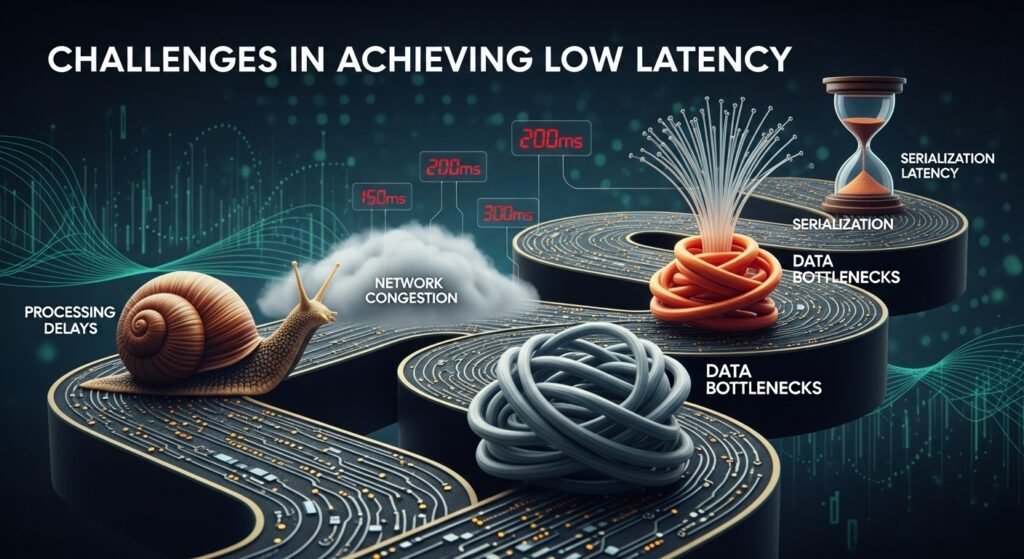
Despite improvements, challenges exist:
1. Network Congestion
Heavy traffic during major events can cause delays.
2. Device Limitations
Older devices may struggle with advanced codecs.
3. ISP Throttling
Some internet providers limit streaming bandwidth.
4. Server Overload
Poorly managed IPTV servers increase latency.
Premium providers invest heavily in infrastructure to avoid these problems.
Security and Stability
Low latency systems must also remain secure.
Modern IPTV platforms use:
- Stream encryption
- Secure login protocols
- Anti-piracy protection
- Scalable cloud infrastructure
Low Latency IPTV for Businesses
It’s not just home users who benefit.
Businesses use low latency IPTV for:
- Sports bars
- Hotels
- Casinos
- Corporate broadcasting
- Event streaming
Real-time delivery improves customer satisfaction.
The Future of Low Latency IPTV
The future looks even faster.
1. Sub-Second Latency
Emerging technologies aim for less than 1-second delay.
2. AI-Based Network Optimization
Artificial intelligence predicts congestion and reroutes traffic automatically.
3. Edge AI Streaming
Combining AI and edge computing will further reduce delay.
4. 8K Streaming
As internet speeds increase, ultra-high resolution with low latency will become standard.
Why Low Latency IPTV Is Essential in 2026
In 2026, viewers demand:
- Instant content
- No buffering
- Real-time sports
- High-quality video
- Seamless device switching
Low latency IPTV meets all these expectations.
It is no longer optional—it is required for competitive streaming services.
How to Choose a Low Latency IPTV Provider
When selecting a service, consider:
- Server stability
- Average delay time
- Channel switching speed
- 4K support
- Customer reviews
- Trial availability
- CDN infrastructure
Testing a trial version can help measure real-world performance.
Tips to Reduce Latency at Home
You can improve your own streaming experience by:
- Using wired Ethernet
- Upgrading router firmware
- Closing background apps
- Upgrading internet plan
- Positioning router centrally
- Using modern streaming devices
Low Latency IPTV and the Streaming Revolution
Low latency IPTV United State is a central part of the modern streaming revolution. It bridges the gap between traditional broadcast television and internet streaming.
For years, cable had the advantage of real-time delivery. Today, IPTV matches—and in some cases surpasses—that performance.
Final Thoughts
Low Latency IPTV is the key to real-time streaming in 2026. It enhances live sports, breaking news, esports, and interactive entertainment by minimizing delay and maximizing performance.
As technology continues to advance—with 5G, AI optimization, and edge computing—IPTV will become even faster and more immersive.
For viewers who demand speed, quality, and reliability, low latency IPTV is not just an upgrade—it is the future of live television.
Frequently Asked Questions (FAQs)
1. What is low latency IPTV?
Low latency IPTV is a type of internet-based television service designed to minimize the delay between live broadcasts and what appears on your screen, often reducing delays to just a few seconds.
2. Why is low latency important?
Low latency ensures real-time viewing of live events such as sports, breaking news, esports tournaments, and financial updates. It prevents spoilers and delivers a synchronized experience for all viewers.
3. How does low latency IPTV differ from regular IPTV?
Regular IPTV can have delays of 20–60 seconds, while low latency IPTV reduces that delay to 2–5 seconds. It also provides faster channel switching, less buffering, and better performance for live events.
4. Can I watch live sports with low latency IPTV?
Yes. Low latency IPTV is ideal for live sports because it allows fans to watch matches in near real-time, without delay or spoilers, and often includes multi-angle viewing options.
5. What internet speed is needed for low latency IPTV?
Recommended speeds are:
- HD streaming: 10–15 Mbps
- 4K streaming: 25+ Mbps
- Multi-device households: 50+ Mbps
Wired Ethernet connections generally provide the most stable performance.
6. Does 5G help reduce latency?
Yes. 5G networks offer faster speeds and lower ping rates, allowing low latency IPTV to perform smoothly even on mobile devices.
7. Can I use low latency IPTV on multiple devices?
Absolutely. Most providers support:
- Smart TVs
- Android TV boxes
- Firestick devices
- Smartphones & tablets
- PCs and laptops
Many plans allow simultaneous streaming on multiple screens.
8. What causes latency in IPTV?
Latency is typically caused by:
- Video encoding and compression
- Network congestion
- Device processing delays
- Long data routes from servers
Low latency IPTV reduces these factors through optimized protocols and CDN distribution.
9. Is low latency IPTV secure?
Reputable providers use:
- Encrypted streaming
- Secure login protocols
- Cloud infrastructure
- Anti-piracy measures
Security ensures safe and reliable streaming.
10. Can I record shows with low latency IPTV?
Yes. Many providers offer cloud DVR features, allowing you to record live broadcasts and watch them later without any additional hardware.
11. How do I choose the best low latency IPTV provider?
Look for:
- Minimal delay (2–5 seconds)
- Fast channel switching
- HD/4K support
- Stable servers
- Multi-device compatibility
- Positive customer reviews
Testing a trial version is recommended before committing to a subscription.
12. Can low latency IPTV replace cable TV?
Yes. It offers live channels, sports, on-demand content, high-quality streaming, and multi-device support, often at a lower cost than traditional cable.
13. Does low latency IPTV support interactive features?
Yes. Features like real-time polls, live chats, multiple camera angles, and interactive sports stats are possible thanks to minimal delay in streaming.
14. What is adaptive bitrate streaming?
Adaptive bitrate streaming automatically adjusts video quality based on your internet speed to prevent buffering while maintaining smooth playback, which is essential for low latency IPTV subscription.
15. What does the future hold for low latency IPTV?
Future developments include:
- Sub-second latency streaming
- AI-based traffic optimization
- Edge computing integration
- 8K streaming support
- Enhanced interactive experiences
Low latency IPTV is set to dominate live television in the coming years.