
In today’s digital world, viewers expect instant access to live TV, sports, news, and entertainment without annoying delays. Traditional cable once dominated home entertainment, but IPTV (Internet Protocol Television) has completely changed the landscape. Among all the innovations in IPTV, one feature stands out the most: low latency.
Low latency IPTV United State is the key to faster channels and better streaming. It ensures minimal delay between live events and what appears on your screen. Whether you are watching live sports, breaking news, or real-time events, latency can make or break your viewing experience.
This complete guide explains everything you need to know about low latency IPTV, how it works, why it matters, and how it delivers smoother streaming in 2026 and beyond.
What Is IPTV?
IPTV (Internet Protocol Television) delivers television content over the internet instead of traditional cable or satellite systems. Instead of broadcasting signals through physical cables or satellite waves, IPTV streams media data packets directly to your device via your internet connection.
IPTV services typically include:
- Live TV channels
- Video on Demand (VOD)
- Catch-up TV
- Pay-per-view events
- Multi-device access
The quality of your IPTV experience depends on several factors, including internet speed, server quality, content delivery networks (CDNs), and most importantly—latency.
What Is Latency in IPTV?
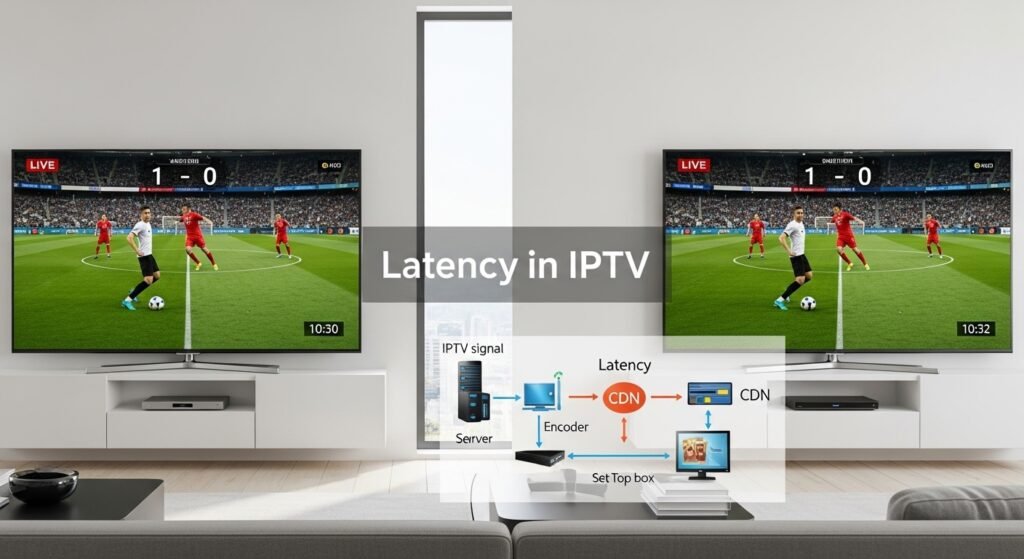
Latency refers to the delay between when a live event happens and when you see it on your screen.
For example:
- A football goal is scored in real life.
- If your stream shows it 30–60 seconds later, that delay is latency.
- Low latency reduces that delay to just a few seconds.
In IPTV, latency is measured in seconds. The lower the latency, the closer your stream is to real-time broadcasting.
Why Low Latency Matters
Low latency is especially important for:
1. Live Sports
Sports fans want real-time action. High latency can cause spoilers if neighbors celebrate before you see the goal.
2. Live News
Breaking news requires immediate delivery. Delays reduce relevance.
3. Live Events & Auctions
Real-time participation depends on instant streaming.
4. Interactive Content
Voting shows, betting platforms, and live engagement features require minimal delay.
Low latency IPTV ensures your experience is as close to real-time as possible.
How Traditional IPTV Creates Delay
Several factors contribute to higher latency:
- Large buffer sizes
- Inefficient encoding
- Overloaded servers
- Poor CDN routing
- Slow internet connections
- Excessive compression
Traditional streaming methods use larger buffers to prevent buffering interruptions. While this improves stability, it increases delay.
Low latency IPTV uses smarter techniques to reduce this buffering delay without sacrificing quality.
How Low Latency IPTV Works
Low latency IPTV uses advanced technologies to minimize delay:
1. Adaptive Bitrate Streaming (ABR)
automatically modifies the quality of the video according on your internet speed. This prevents buffering without needing large delays.
2. Smaller Buffer Segments
Instead of loading large chunks of video, low latency systems stream smaller segments more frequently.
3. Optimized Encoding
Modern codecs like H.265 (HEVC) compress video efficiently while maintaining high quality.
4. Content Delivery Networks (CDNs)
Global CDN networks distribute content closer to users, reducing transmission time.
5. WebRTC & Low-Latency HLS
New streaming protocols are designed specifically for real-time delivery.
Low Latency vs Normal IPTV
| Feature | Normal IPTV | Low Latency IPTV |
|---|---|---|
| Delay | 20–60 seconds | 1–10 seconds |
| Channel Switching | Moderate speed | Instant |
| Sports Experience | Delayed reactions | Real-time feel |
| Buffering | Possible | Reduced |
| User Experience | Standard | Premium |
Low latency IPTV clearly provides a more immersive and responsive experience.
Fast Channel Switching Explained
Low latency is closely linked with fast channel switching.
Fast channel switching means:
- Channels load instantly
- No black screen delay
- No loading spinner
- Smooth transitions
Advanced IPTV systems preload nearby channels or use efficient stream switching to reduce wait time to under one second.
This makes IPTV feel like traditional cable—but better.
Internet Speed Requirements
To enjoy low latency IPTV, you need a stable internet connection.
Recommended speeds:
- HD Streaming: 10 Mbps
- Full HD: 15–20 Mbps
- 4K Streaming: 25–50 Mbps
More important than speed is stability. A consistent connection reduces packet loss and streaming interruptions.
Benefits of Low Latency IPTV
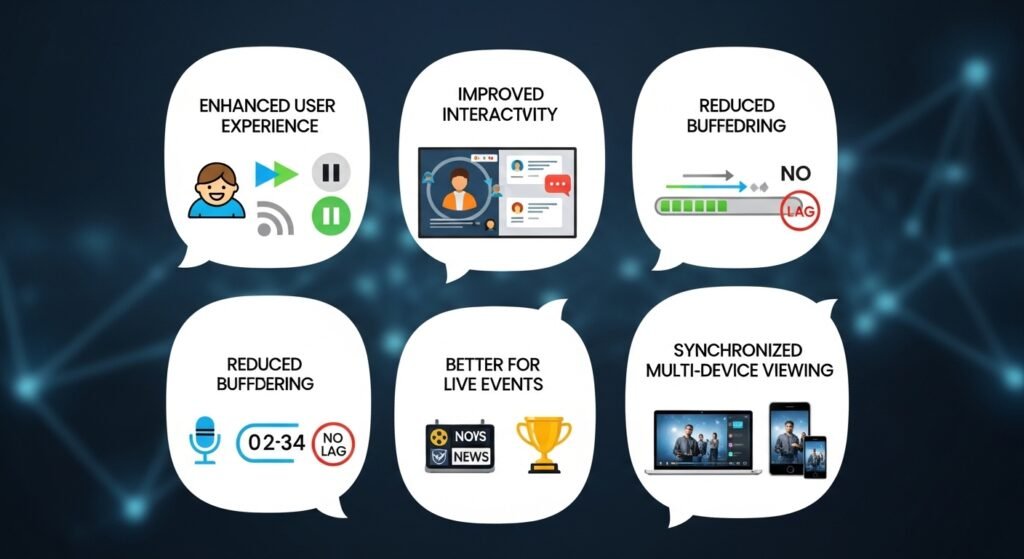
1. Real-Time Viewing
You see events almost instantly.
2. Better Sports Experience
No spoilers from social media or neighbors.
3. Improved Channel Switching
Feels smooth and responsive.
4. Reduced Buffering
Efficient delivery systems minimize interruptions.
5. Higher Engagement
Live betting, voting, and interactive features work better.
Low Latency and 4K Streaming
Many viewers think low latency only applies to HD streams. However, modern IPTV supports low latency even in 4K resolution.
With improved compression and stronger broadband networks in 2026, ultra HD low latency streaming is now achievable.
However, higher resolutions require stronger internet stability.
Devices That Support Low Latency IPTV
Low latency IPTV works across multiple platforms:
- Smart TVs
- Android TV boxes
- Firestick devices
- Smartphones (Android & iOS)
- Tablets
- Laptops and PCs
Modern IPTV apps are optimized for fast stream switching and minimal delay.
Common Causes of High Latency
If your IPTV feels delayed, possible causes include:
- Slow ISP routing
- Weak Wi-Fi signal
- Overcrowded servers
- Outdated IPTV apps
- High network congestion
Using Ethernet instead of Wi-Fi and choosing premium IPTV providers often improves latency.
IPTV Trends in 2026
Low latency IPTV continues to evolve with:
- AI-based stream optimization
- Edge computing servers
- 5G mobile streaming
- Cloud-based IPTV systems
- Smarter CDN routing
As internet infrastructure improves worldwide, latency will continue to decrease.
Is Low Latency IPTV More Expensive?
Not necessarily.
Many premium IPTV USA services include low latency technology as part of their standard offering. However, free or low-quality providers may not invest in optimized infrastructure.
You often get what you pay for when it comes to streaming quality.
Security and Stability
Low latency IPTV also relies on:
- Encrypted streaming connections
- Server redundancy
- Load balancing systems
- Secure account management
Stable infrastructure ensures consistent performance even during peak hours.
How to Choose a Low Latency IPTV Provider
Look for:
- Fast channel switching demos
- Minimal delay during sports
- HD and 4K support
- Multi-device compatibility
- Positive user reviews
- Reliable customer support
Always test trial versions before committing long-term.
Troubleshooting Latency Issues
If you experience delay:
- Restart your router
- Use wired Ethernet
- Close background apps
- Check your internet speed
- Update your IPTV app
- Contact your provider
Often, small adjustments significantly improve streaming performance.
The Future of Real-Time IPTV
Low latency IPTV is becoming the industry standard.
Future developments may include:
- Sub-second latency
- AI-powered buffering elimination
- Fully synchronized global streams
- Interactive augmented reality integration
Streaming technology continues to move closer to true real-time broadcasting.
Final Thoughts
Low Latency IPTV is not just a technical feature—it is a complete upgrade to the streaming experience.
By reducing delays, improving channel switching speed, and optimizing delivery systems, low latency IPTV delivers:
- Faster channels
- Better streaming quality
- Real-time sports and news
- Smoother entertainment
In 2026 and beyond, viewers demand instant access and seamless performance. Low latency IPTV meets those expectations and sets a new standard for digital entertainment.
Frequently Asked Questions (FAQs) – Low Latency IPTV Explained
1. What is Low Latency IPTV?
Low Latency IPTV refers to Internet Protocol Television services that deliver live TV content with minimal delay between the broadcast source and the viewer’s screen. Unlike traditional streaming that may lag 20–60 seconds behind real-time events, low latency IPTV reduces this delay significantly, often to just a few seconds.
2. Why is low latency important for live streaming?
Low latency is crucial for live events such as sports, news, and gaming because it ensures you see the action almost instantly. High latency can cause spoilers (e.g., hearing a goal celebration before seeing it) and disrupt the live viewing experience.
3. What causes latency in IPTV streaming?
Several factors can increase latency:
- Slow internet connection
- Network congestion
- Long buffering times
- Inefficient streaming protocols
- Server distance from the user
- Outdated hardware or apps
4. What is considered good latency for IPTV?
- 0–5 seconds: Excellent (near real-time)
- 5–10 seconds: Very good
- 10–20 seconds: Acceptable
- 20+ seconds: Noticeable delay
For sports and live broadcasts, under 10 seconds is ideal.
5. How does low latency IPTV work?
Low latency IPTV uses advanced streaming technologies such as:
- Adaptive bitrate streaming
- Optimized CDN (Content Delivery Network) routing
- Efficient compression codecs
- Reduced buffer segments
- Real-time streaming protocols
These technologies minimize delay while maintaining video quality.
6. Does low latency affect video quality?
No, not necessarily. Modern IPTV systems balance low delay with high-definition (HD and 4K) quality. However, very unstable internet connections may cause temporary quality drops due to adaptive streaming.
7. What internet speed is required for low latency IPTV?
Recommended speeds:
- HD Streaming: 10–15 Mbps
- 4K Streaming: 25+ Mbps
- Multiple Devices: 50+ Mbps
A stable wired connection is often better than Wi-Fi for reducing delay.
8. Is low latency IPTV better for sports streaming?
Yes. Sports fans benefit the most because real-time updates are critical. Low latency ensures you watch goals, touchdowns, or match-winning moments without delay.
9. Can Wi-Fi increase IPTV latency?
Yes. Wi-Fi interference, distance from the router, and network congestion can increase delay. Using Ethernet (wired connection) often improves stability and reduces latency.
10. What devices support low latency IPTV?
Low latency IPTV works on:
- Smart TVs
- Android TV boxes
- Firestick
- Smartphones (Android & iOS)
- Tablets
- PCs and laptops
Performance depends on device hardware and app optimization.
11. How is low latency different from buffering?
Latency refers to delay between broadcast and display.
Buffering refers to playback interruptions caused by slow data delivery.
You can have low latency but still experience buffering if your internet is unstable.
12. Does server location impact?
Yes. The closer the streaming server is to your physical location, the lower the delay. That’s why IPTV providers use multiple global servers.
13. What is adaptive streaming in IPTV?
Adaptive streaming automatically adjusts video quality based on your internet speed to prevent buffering and maintain smooth playback.
14. Can VPNs increase latency?
Sometimes. A VPN can add extra routing steps, which may increase delay. However, premium VPNs with nearby servers may not significantly affect performance.
15. Is low latency IPTV suitable for gaming streams?
Yes. For live game broadcasts and esports, low latency ensures real-time action without spoilers or delay.
16. How can I reduce at home?
You can:
- Use a wired Ethernet connection
- Upgrade your internet plan
- Restart your router regularly
- Close background downloads
- Use a high-performance IPTV app
- Choose a provider with nearby servers